
About the Department
Since its establishment in 1956, the Department of Mathematics at Sree Chaitanya College, Habra, has been dedicated to nurturing the logical and analytical skills of its students through a well-rounded curriculum and diverse co-curricular activities. Offering both Honours and General courses since its inception, the department has consistently focused on holistic education. Seat Matrix of this Department is as follows:
| Seat Matrix | ||
|---|---|---|
| Total seats: | 103 | |
| UR | 47 | PWD: 2 |
| SC | 23 | PWD: 1 |
| ST | 6 | PWD: 0 |
| OBC-A | 10 | PWD: 1 |
| OBC-B | 7 | PWD: 0 |
| EWS | 10 | PWD: 1 |
In addition to regular classroom instruction, the department encourages student engagement in various branches of Mathematics through seminars and workshops. With a fully equipped computer lab and a dedicated ICT room, the department integrates technology to enhance the learning experience. Students also participate in extracurricular activities such as publishing magazines, organizing freshers' welcomes, farewell programs, and celebrating events like Teachers' Day and National Mathematics Day etc. Many of the department's alumni have gone on to serve in significant roles across various social institutions, reflecting the quality of education imparted.
To further support students, the department recently implemented a Mentor-Mentee-Relational-Group system among faculty and Honours students, aiming to provide personalized guidance and support. Looking ahead, the department has outlined plans to implement direct supportive measures to help students overcome challenges and excel in their academic pursuits.
| 1. | Name of the department: | MATHEMATICS |
| 2. | Year of Establishment: |
|
| 3. | Names of Programmes/ Courses offered: |
B.Sc. Honours. B.Sc. General. |
| 4. | Names of Interdisciplinary courses and the departments/ units involved |
Statistics Computer Science Physics Economics |
| 5. | Annual/ semester/ choice based credit system (programme wise) |
Semester System as per the University Curriculum |
Faculty Profile
Teaching Faculty

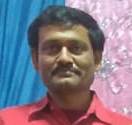
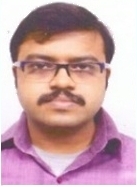
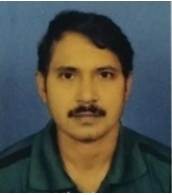



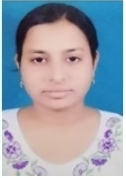
Courses Offered
Currently Offered:
- B.Sc. Honours in Mathematics
- B.Sc. General with Mathematics
Special Features:
- Fully equipped computer lab
- Dedicated ICT room
- Mentor-Mentee-Relational-Group system
- Regular seminars and workshops
Syllabus
West Bengal State University
Four Year UG Programme (Honours, Honours with Research and 3 Year Multi-Disciplinary Course) in Mathematics
Under National Education Policy (NEP) - Effective from 2023-2024
SEMESTER I
MTMDSC101T: Algebra (Credits: 5, Marks: 100)
- Classical Algebra: De-Moivre's theorem, nth roots of unity, exponential and trigonometrical functions, logarithm of complex numbers; Polynomial equations, relation between roots and coefficients, transformation of equations, Cardan's solution of cubic, Ferrari's method for biquadratic; AM ≥ GM ≥ HM inequality
- Number Theory: Equivalence relations, functions, permutations; Well-ordering principle, mathematical induction, division algorithm, GCD, Euclid's lemma, Fundamental Theorem of Arithmetic, congruences, Euler φ function, Euler's theorem, Fermat's theorem
- Matrix Theory: Algebra of matrices, symmetric, skew-symmetric, Hermitian, unitary matrices; Determinants, inverse of matrix, Cramer's rule; Elementary row/column operations, rank of matrix, system of linear equations; Eigenvalues, eigenvectors, Cayley-Hamilton theorem
MTMMIN101T / MTMCOR101T: Algebra (Minor) (Credits: 5, Marks: 100)
- Classical Algebra, Abstract Algebra (groups, subgroups, Lagrange's theorem, rings, integral domains, fields), Linear Algebra (vector spaces, linear transformations, rank, eigenvalues, Cayley-Hamilton theorem)
SEMESTER II
MTMDSC202T: Calculus (Credits: 5, Marks: 100)
- Limits, Continuity and Differentiability: ε-δ definition, types of discontinuities, successive differentiation, Leibnitz theorem, partial differentiation, Euler's theorem
- Mean Value Theorems: Rolle's theorem, Lagrange's MVT, Cauchy's MVT, Taylor's theorem, Maclaurin's series, indeterminate forms
- Integral Calculus: Integration of rational and irrational functions, reduction formulae, improper integrals, Beta and Gamma functions
- Applications: Tangent and normal, curvature, asymptotes, maxima/minima, tracing of curves, length of plane curves, volume and surface area of solids of revolution
MTMMIN202T / MTMCOR202T: Calculus (Minor) (Credits: 5, Marks: 100)
- Limits, continuity, differentiability, mean value theorems, integral calculus, Beta and Gamma functions, applications of calculus
SEMESTER III
MTMDSC303T: Analytical Geometry and Vector Analysis (Credits: 5, Marks: 100)
- Analytical Geometry: Translation and rotation of axes, conics, polar equations, tangent and normal; Equations of planes, straight lines in 3D, shortest distance between skew lines; Spheres, cylinders, conicoids, paraboloids, ellipsoid, hyperboloids
- Vector Analysis: Scalar and vector triple products, vector functions, gradient, divergence and curl, line integrals, surface integrals, volume integrals; Green's theorem, Stokes' theorem, Gauss' theorem
MTMMIN303T / MTMCOR303T: Differential Equations (Minor) (Credits: 5, Marks: 100)
- First order ODEs (exact equations, integrating factors), linear ODEs with constant coefficients, method of variation of parameters; First order PDEs (Lagrange's method, Charpit's method), classification of second order PDEs
SEMESTER IV
MTMDSC404T: Ordinary Differential Equations-I and Mechanics-I (Credits: 5, Marks: 100)
- ODE-I: First order equations, exact equations, integrating factors, Picard's existence theorem; Linear ODEs with constant coefficients, method of undetermined coefficients; Plane autonomous systems, critical points, stability, Lotka-Volterra system
- Mechanics-I: Coplanar forces, friction, center of gravity, virtual work; Particle kinematics, conservation laws; Motion in straight line, SHM, projectile motion, central orbits, inverse square law
MTMDSC405T: Real Analysis-I (Credits: 5, Marks: 100)
- Properties of real numbers, countable sets, supremum and infimum, Archimedean property; Open/closed sets, Bolzano-Weierstrass theorem, Heine-Borel theorem; Sequences, convergence, Cauchy sequences; Infinite series, convergence tests (comparison, ratio, root, integral tests); Limits and continuity of functions; Differentiability, Darboux theorem; Monotone functions, functions of bounded variation
MTMDSC406T: Group Theory-I and Number Theory (Credits: 5, Marks: 100)
- Group Theory-I: Groups, subgroups, cyclic groups, permutation groups, cosets, Lagrange's theorem, normal subgroups, quotient groups, homomorphisms, isomorphism theorems
- Number Theory: Division algorithm, Euclidean algorithm, fundamental theorem of arithmetic, linear Diophantine equations; Congruences, Chinese remainder theorem, Fermat's theorem, Wilson's theorem; Number theoretic functions (φ, μ, σ, τ), Möbius inversion; Primitive roots, quadratic residues, Legendre symbol, quadratic reciprocity
MTMDSC407T: Partial Differential Equations & Integral Transforms (Credits: 5, Marks: 100)
- PDEs: Derivation of PDEs, first order PDEs (Lagrange's method, Charpit's method), higher order PDEs with constant coefficients, classification of second order PDEs; Wave equation, Laplace equation, heat equation, separation of variables
- Integral Transforms: Fourier transform, Fourier cosine/sine transforms, convolution theorem; Laplace transform, properties, inverse Laplace transform, applications to ODEs and PDEs; Hankel transform
SEMESTER V
MTMDSC508T: Real Analysis-II (Credits: 5, Marks: 100)
- Riemann integration, Darboux theorem, integrability of monotone and continuous functions; Pointwise and uniform convergence of sequences of functions, theorems on continuity, derivability and integrability; Fourier series, Bessel's inequality, Parseval's identity; Power series, radius of convergence, Abel's theorem, Weierstrass approximation theorem
MTMDSC509T: Ring Theory and Linear Algebra-I (Credits: 5, Marks: 100)
- Ring Theory: Rings, integral domains, fields, subrings, ideals, factor rings, ring homomorphisms, isomorphism theorems; Maximal and prime ideals; Divisibility in integral domains, UFD, Euclidean domain; Polynomial rings, Eisenstein's irreducibility criterion
- Linear Algebra-I: Vector spaces, subspaces, linear independence, basis, dimension; Inner product spaces, orthogonality, Gram-Schmidt process; Linear transformations, rank-nullity theorem; Linear functionals, dual spaces; Eigenvalues, eigenvectors, Cayley-Hamilton theorem
MTMDSC510M: Numerical Analysis (Theory & Practical) (Credits: 5, Marks: 100)
- Representation of numbers, errors; Root finding: Bisection, Regula-falsi, Newton-Raphson methods; System of linear equations: Gaussian elimination, LU decomposition, Gauss-Jacobi, Gauss-Seidel; Interpolation: Newton's forward/backward, Lagrange's interpolation; Numerical integration: Trapezoidal rule, Simpson's 1/3 rule; Numerical solution of ODEs: Euler's method, Runge-Kutta methods; PDEs: Heat equation by FTCS and Crank-Nicolson methods
MTMDSC511T: Multivariate Calculus and Metric Spaces (Credits: 5, Marks: 100)
- Multivariate Calculus: Functions of several variables, partial differentiation, total differentiability, chain rule, directional derivatives, gradient, extrema, Lagrange multipliers; Double and triple integrals, change of variables; Vector fields, divergence, curl, line integrals, Green's theorem, Stokes' theorem, divergence theorem
- Metric Spaces: Definition and examples, open/closed sets, sequences, Cauchy sequences, completeness; Continuous mappings, uniform continuity; Connectedness, compactness, Heine-Borel property; Contraction mappings, Banach fixed point theorem
SEMESTER VI
MTMDSC612T: Operations Research and Game Theory (Credits: 5, Marks: 100)
- Linear Programming Problem, simplex method, two-phase method, duality; Transportation problem, assignment problem, Hungarian method; Game theory, two-person zero-sum games, graphical method, dominance method
MTMDSC613T: Group Theory-II and Ordinary Differential Equations-II (Credits: 5, Marks: 100)
- Group Theory-II: Direct products, fundamental theorem of finite abelian groups; Group actions, orbit-stabilizer theorem, class equation, Sylow theorems; Composition series, solvable groups
- ODE-II: Power series solutions, ordinary points, regular singular points, Frobenius method; Special functions: Legendre polynomials, Bessel functions; Sturm-Liouville problems, eigenvalues and eigenfunctions, Green's function
MTMDSC614T: Probability & Statistics (Credits: 5, Marks: 100)
- Axiomatic probability, conditional probability, Bayes' theorem; Random variables, distribution functions, expectation, moments; Discrete distributions (Binomial, Poisson), continuous distributions (Normal, Exponential); Joint distributions, correlation, regression; Laws of large numbers, central limit theorem; Sampling distributions, estimation, hypothesis testing, confidence intervals, chi-square test
MTMDSC615T: Complex Analysis (Credits: 5, Marks: 100)
- Complex numbers, Riemann sphere; Analytic functions, Cauchy-Riemann equations, harmonic functions; Complex integration, Cauchy-Goursat theorem, Cauchy's integral formula; Power series, Taylor and Laurent series, singularities; Calculus of residues, Cauchy's residue theorem, evaluation of real integrals; Conformal mappings, Möbius transformations
SEMESTER VII
MTMDSC716T: Topology (Credits: 5, Marks: 100)
- Topological spaces, bases, open/closed sets, closure, interior; Continuous maps, homeomorphisms; Countability axioms, separation axioms (T0-T4), Urysohn's lemma; Connectedness, compactness, product topology
MTMDSC717T: Field Extension & Linear Algebra-II (Credits: 5, Marks: 100)
- Field Extension: Extension fields, algebraic elements, splitting fields, algebraic closure; Finite fields, classification of finite fields; Galois theory (fundamental theorem), solvability by radicals
- Linear Algebra-II: Minimal polynomial, diagonalization, Jordan canonical form; Adjoint of linear operator, normal and self-adjoint operators, spectral theorem; Bilinear forms, quadratic forms, Sylvester's law of inertia
SEMESTER VIII
MTMDSC818T: Functional Analysis (Credits: 5, Marks: 100)
- Review of metric spaces, Baire category theorem; Normed linear spaces, Banach spaces; Bounded linear operators, Hahn-Banach theorem; Dual spaces, reflexivity, weak convergence; Uniform boundedness principle, open mapping theorem, closed graph theorem; Inner product spaces, Hilbert spaces, orthonormal bases, Riesz representation theorem
MTMDSC819T: Mechanics-II (Credits: 5, Marks: 100)
- System of particles, rigid body dynamics, Euler angles, inertia tensor; Constraints, generalized coordinates, Lagrange's equations; Hamiltonian mechanics, Hamilton's equations; Small oscillations, normal modes; Hamilton's principle, canonical transformations, Hamilton-Jacobi theory
MTMDSC820T: Discrete Mathematics & Differential Geometry (Credits: 5, Marks: 100)
- Discrete Mathematics: Boolean algebra, logic gates, switching circuits; Graph theory, Eulerian and Hamiltonian graphs, trees, spanning trees, matrix representation of graphs
- Differential Geometry: Curves in plane and space, curvature, torsion, Frenet formulae; Surfaces in R³, first and second fundamental forms, Gaussian curvature, geodesics
MTMDSC821M: Data Science (Credits: 5, Marks: 100)
- Python programming review; Statistics for data science, correlation, regression; Binary logistic regression; Clustering and classification (K-means, hierarchical clustering); Big data concepts, missing value imputation; Hands-on practical with Python for EDA, data visualization, and machine learning algorithms
MINOR COURSES (Semester I-VI)
- Sem I: MTMMIN101T / MTMCOR101T - Algebra
- Sem II: MTMMIN202T / MTMCOR202T - Calculus
- Sem III: MTMMIN303T / MTMCOR303T - Differential Equations
- Sem IV: MTMCOR404T - Probability Theory & Mechanics
- Sem V: MTMCOR505T - Linear Programming Problem & Game Theory
- Sem VI: MTMCOR606T - Numerical Methods and Integral Transforms
- Sem VII: MTMSMC701T - Discrete Mathematics
MULTIDISCIPLINARY COURSES (MDC)
MTMHMD101T / 201T / 301T / MTMGMD401T / 501T / 601T: Basic Mathematics (Credits: 3, Marks: 50)
- Sets, relations, functions; Probability and statistics (mean, median, mode, variance); Matrix and determinants, inverse of matrix, rank, solution of linear equations; Coordinate geometry (2D) - straight lines, circles, parabola, ellipse, hyperbola; Linear Programming Problem - graphical solution
SKILL ENHANCEMENT COURSES (SEC)
C-Programming Language (Credits: 3, Marks: 50)
- Basics of programming, data types, operators, control statements, arrays, functions, pointers, matrix operations
Programming Language-Python (Credits: 3, Marks: 50)
- Python basics, variables, conditionals, loops, functions, strings, lists, tuples, dictionaries, files, modules; Practical examples including solving equations, matrix operations, plotting functions
HONOURS WITH RESEARCH
MTMRES801T/M: Research Project/Dissertation (Credits: 15, Marks: 300)
Research Project/Dissertation as per UG Regulation
For detailed readings, suggested references, and question patterns, please contact the Mathematics Department office or refer to the complete syllabus document.
Program and Course Outcomes
Program Outcomes:
Students will develop strong logical, analytical, and problem-solving skills in mathematics.
Course Outcomes:
Detailed course outcomes will be available as per the university curriculum.
Departmental Routine
Department of Mathematics, Sree Chaitanya College, Habra
Routine: 2025 (Odd Semesters - I, III, V) - NEP Curriculum
| Day | Time | Semester I | Semester III | Semester V |
|---|---|---|---|---|
| MONDAY | 8:30 - 9:30 | - | Sem3(M): MA3 : SP | - |
| 9:30 - 10:30 | Sem1(H): DS1 : UDG | - | Sem5(M): MA5 : PD | |
| 10:30 - 11:30 | Sem1(M): MA1 : SP | - | Sem5(M): MA5 : PD | |
| 11:30 - 12:30 | Sem1(H): DS1 : UDG | - | Sem5(H): DS9 : UDG | |
| 12:30 - 1:30 | Sem1(E): MA1 : SP | - | Sem5(E): MA5 : PD | |
| 1:30 - 2:30 | LUNCH BREAK | |||
| MONDAY (contd.) | 2:30 - 3:30 | Sem1(H): MA1+MB1 : UDG | - | Sem5(E): SEC : SD |
| 3:30 - 4:30 | Sem1(E): MA1+MB1 : UDG | - | Sem5(H): DS8 : PD | |
| 4:30 - 5:30 | - | Sem3(E): MA3 : SP | - | |
| TUESDAY | 8:30 - 9:30 | - | Sem5(M): SEC : SD | - |
| 9:30 - 10:30 | Sem1(M): MA1 : SP | - | Sem5(H): DS10 : SM | |
| 10:30 - 11:30 | - | Sem3(H): DS3 : UD | Sem5(H): DS8 : PD | |
| 11:30 - 12:30 | Sem1(H): DS1 : UDG | - | Sem5(H): SEC : AS | |
| 12:30 - 1:30 | - | Sem3(H): DS3 : UD | Sem5(E): MA5 : PD | |
| 1:30 - 2:30 | LUNCH BREAK | |||
| TUESDAY (contd.) | 2:30 - 3:30 | - | Sem3(H): DS3 : UD | Sem5(E): MA5 : PD |
| 3:30 - 4:30 | - | - | - | |
| WEDNESDAY | 8:30 - 9:30 | - | Sem3(M): MA3 : SM | - |
| 9:30 - 10:30 | Sem1(H): DS1 : UDG | - | Sem5(H): DS11 : UD | |
| 10:30 - 11:30 | - | Sem3(H): MA3+MB3 : UDG | Sem5(H): DS8 : SM | |
| 11:30 - 12:30 | Sem1(M): MA1 : SP | - | Sem5(E): SEC : AS | |
| 12:30 - 1:30 | - | - | Sem5(H): DS11 : UD | |
| 1:30 - 2:30 | LUNCH BREAK | |||
| WEDNESDAY (contd.) | 2:30 - 3:30 | Sem1(E): MA1 : SP | - | Sem5(E): SEC : AS |
| 3:30 - 4:30 | Sem1(E): MA1 : SP | Sem3(H): MA3+MB3 : UDG | Sem5(H): DS9 : UDG | |
| 4:30 - 5:30 | - | Sem3(H): MA3 : PD | - | |
| 5:30 - 6:30 | - | Sem3(E): SEC : SS | - | |
| THURSDAY | 8:30 - 9:30 | - | Sem3(M): SEC : SD | Sem5(M): SEC : SS |
| 9:30 - 10:30 | Sem1(H): SEC : SM | - | Sem5(M): MA5 : PD | |
| 10:30 - 11:30 | - | - | Sem5(H): DS10 : SM | |
| 11:30 - 12:30 | - | Sem3(H): DS9 : UDG | Sem5(E): MA5 : PD | |
| 12:30 - 1:30 | - | Sem3(M): MA3 : SM | - | |
| 1:30 - 2:30 | LUNCH BREAK | |||
| THURSDAY (contd.) | 2:30 - 3:30 | - | Sem3(H): DS3 : UD | Sem5(E): MA5 : PD |
| 3:30 - 4:30 | Sem1(H): MA1+MB1 : UDG | Sem3(H): MA3+MB3 : UDG | - | |
| 4:30 - 5:30 | Sem1(H): MA1+MB1 : UDG | Sem3(E): SEC : SS | - | |
| 5:30 - 6:30 | - | Sem3(E): SEC : SS | - | |
| FRIDAY | 8:30 - 9:30 | Sem1(H): DS1 : UDG | - | - |
| 9:30 - 10:30 | Sem1(H): MA1+MB1 : UD | - | Sem5(M): MA5 : PD | |
| 10:30 - 11:30 | - | Sem3(M): MA3 : SP | Sem5(M): MA5 : PD | |
| 11:30 - 12:30 | - | Sem3(M): MA3 : SM | Sem5(H): DS11 : UD | |
| 12:30 - 1:30 | - | Sem3(M): SEC : AS | Sem5(M): SEC : SD | |
| 1:30 - 2:30 | LUNCH BREAK | |||
| FRIDAY (contd.) | 2:30 - 3:30 | Sem1(E): MA1 : SP | - | Sem5(H): DS11 : UD |
| 3:30 - 4:30 | - | Sem3(E): SEC : SS | Sem5(E): MA5 : PD | |
| 4:30 - 5:30 | - | Sem3(E): MA3 : PD | Sem5(H): DS9 : SP | |
| 5:30 - 6:30 | - | Sem3(E): MA3 : SP | Sem5(E): SEC : AS | |
| SATURDAY | 8:30 - 9:30 | Sem1(M): MA1 : SP | - | - |
| 9:30 - 10:30 | Sem1(M): MA1 : SP | - | - | |
| 10:30 - 11:30 | - | Sem3(H): SEC : SM | Sem5(H): DS9 : SP | |
| 11:30 - 12:30 | - | Sem3(H): MA3+MB3 : UDG | Sem5(H): DS8 : PD | |
| 12:30 - 1:30 | Sem1(H): SEC : SM | - | Sem5(H): DS8 : SM | |
| 1:30 - 2:30 | LUNCH BREAK | |||
| SATURDAY (contd.) | 2:30 - 3:30 | Sem1(H): SEC (Practical) : SM | - | - |
| 3:30 - 4:30 | - | Sem3(H): DS3 : UD | Sem5(E): MA5 : PD | |
| 4:30 - 5:30 | - | - | - | |
Abbreviations:
- H - Honours
- M - Major
- E - Elective/Minor
- DS - Discipline Specific
- MA - Major Course
- MB - Minor Course
- SEC - Skill Enhancement Course
- UD/UDG - UDG Classroom
- SP - SP Classroom
- SM - SM Classroom
- PD - PD Classroom
- AS/SS - AS/SS Classroom
Note: Routine is subject to change. Please contact the Mathematics Department for any updates or clarifications.
Activities
Departmental Achievements
.jpg)
Assets
- Fully equipped computer lab
- Dedicated ICT room
- Mathematics library with reference books
- Departmental seminar room
Student Progression
| Category | 2021-22 | 2022-23 | 2023-24 | 2024-25 |
|---|---|---|---|---|
| Percentage of students graduating at first attempt | 88.89% | 80% | 75% | 81.8% |
| Average CGPA & equivalent percentage | 9.59 [83.95%] | 9.07 [76.7%] | 7.97 [65.63%] | 7.91 [65.75%] |
| Highest CGPA | 9.96 [Ria Chakraborty] | 9.70 [Romel Dutta] | 8.86 [Amrita Sadhu] | 9.29 [Ananya Biswas] |
The department has implemented a Mentor-Mentee-Relational-Group system to support student progression.
Notable Alumni
| Sl No | Name | Year of Passing | Affiliation |
|---|---|---|---|
| 1 | Somnath Mondal | 2012 | ASI, WB Police |
| 2 | Mohana Ghosh | 2014 | Ministry Of Defence, Govt. of India |
| 3 | Abhijit Sarkar | 2014 | Loco Pilot, Indian Railways |
| 4 | Kuntal Mondal | 2015 | Assistant Professor, Seacom Skills University |
| 5 | Avishek Bhowmick | 2015 | Auditor, Director General of Audit |
| 6 | Dipto Kundu | 2015 | Department of Health and Family Welfare, WB |
| 7 | Sabnaz Saifulla | 2015 | SI, Kolkata Police |
| 8 | Dipti Paik | 2021 | Research Scholar, IIT Delhi (M.Sc. From IIT Chennai) |
WBSU Question Papers
Previous years' question papers for Mathematics will be made available here for student reference.
Gallery
Photo gallery of departmental events, seminars, workshops, and activities will be displayed here.